Most of people sit at least 6-8 hours per day. This leads to a more dormant posterior chain and poor posture. The posterior chain refers to the entire backside of the body, which means both upper and lower body muscles are included.
The longer sitting throughout the day, the tighter your hip flexors become. And the glutes lose their strength and become inactive. Tight hip flexors and inactive glutes can be fixed by building a strong posterior chain
Exercises like the deadlift, kettlebell swing, and glute bridge are just a few effective options to add to your posterior chain exercise roster. Let’s take a closer look at how a posterior chain workout should be executed for optimal results.
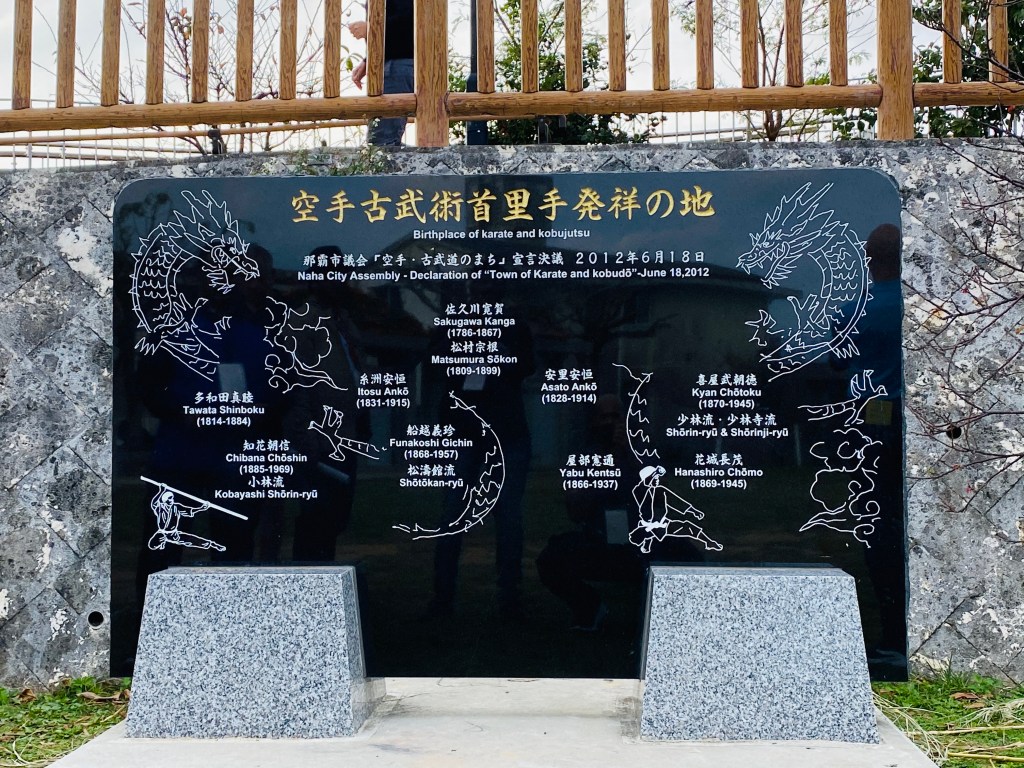
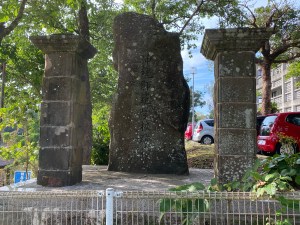
The monument Built in 2018. A monument praising To-di Sakugawa (Sakugawa Kanga). The monument dedicated to the birthplace of Shuri-Te with Sensei Sakugawa Kango as forefather. As masters of Shuri-te who tracer their lineage to Sakugawa, the names of expert such as Matsumura Soken, Asato Anko, Itosu Anko among others are engraved on the monument. The monument located 1-Chome Shuri Sakiyama-Cho ( inside the Sakiyama Park)
Sakugawa Kango
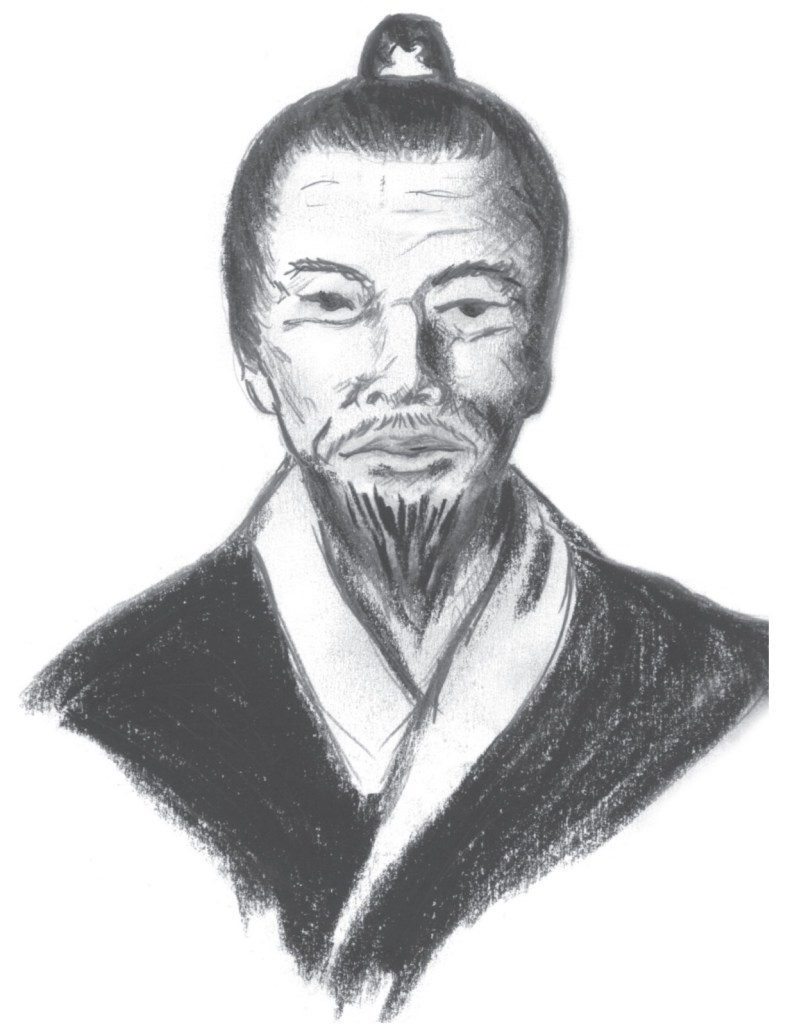
The father of Okinawan Karate, Master Kanga Sakugawa was born in Shuri, Okinawa in 1733. In 1750, Mster Sakukawa began his training as a student of an Okinawan monk, Peichin Takahara. After six years of training, Takahara suggested that Master Sakugawa train under Master Kusanku, a Chinese master in Ch’uan Fu. Master Sakugawa spent the next six years training with Kusanku and began to spread what he learned to Okinawa in 1762. He became such an expert that people gave him, as his nickname, “Tode” Sakugawa (“Chinese Hand”). His most famous student, Matsumura Sokon, went on to develop Shuri-te which later developed into Shorin-ryu style of karate.
Master Sakugawa also called the father Okinawan Karate, is considered by many to be Okinawan’s first real karate teacher and author of of the first Dojo Kunhttps://g.co/kgs/LWEZ3J. He created the Sakugawa no Kun, a bo Kata.
Photo :Photo Taken on 2020 and All information collected during “Karate Historical Tour” Organized by Okinawa Karate Kaikan 2020
Built in 2018. A monument praising To-di Sakugawa (Sakugawa Kanga). The monument dedicated to the birthplace of Shuri-Te with Sensei Sakugawa Kango as forefather. As masters of Shuri-te who tracer their lineage to Sakugawa, the names of expert such as Matsumura Soken, Asato Anko, Itosu Anko among others are engraved on the monument. Located 1-Chome Shuri Sakiyama-Cho (inside the Sakiyama Park)
MONUMENT – CHIBANA CHOSHIN Sensei ( Founder of Shorin Ryu)
The monument honoring of Sensei Chibana Choshin (Founder of Shorin Ryu). Built in 2018, when he was fifteen, Chibana Sensei became a student of Itosu Sensei and studied Karate. He named his karate as Shorin Ryu in 1933. After the battle of Okinawa during WWII, he instructed his students at the Public Hall in Shuri Yamagawa- Cho. The monument located – 1-27 Shuri Yamagawa-Cho.
Monument “Karate ni sente nashi.” – There is no first strike in Karate
The monument Honoring to Sensei Funakoshi Gichin
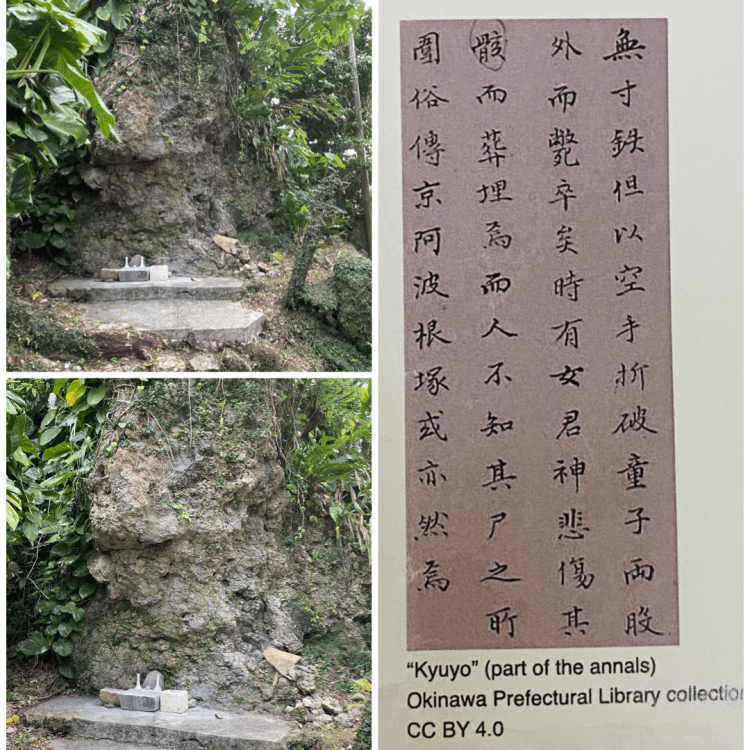
KYO AHAGON ZUKA (tombstone)
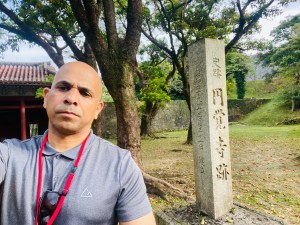
For the first time history of Ryukyu, the characters for “空手” were used in relation with an affair involving a man Kyo Ahagon Jikki. This is the place Where are you now Ahagon died. The Word “空手” here means empty hand fist , Ahagon was a martial expert.
OKINAWA NORML SCHOOL
In this School Karate was taught for a long time since 1906 by Sensei Yabu Kentsu . After Sensei Yabu Passing, Sensei Miyagi Chojun (1888-1953) instructed this school. and spread Karate in various areas.
***All information collected during “Karate Historical Tour” Organized by Okinawa Karate Kaikan 2020




 Jabir Dojo